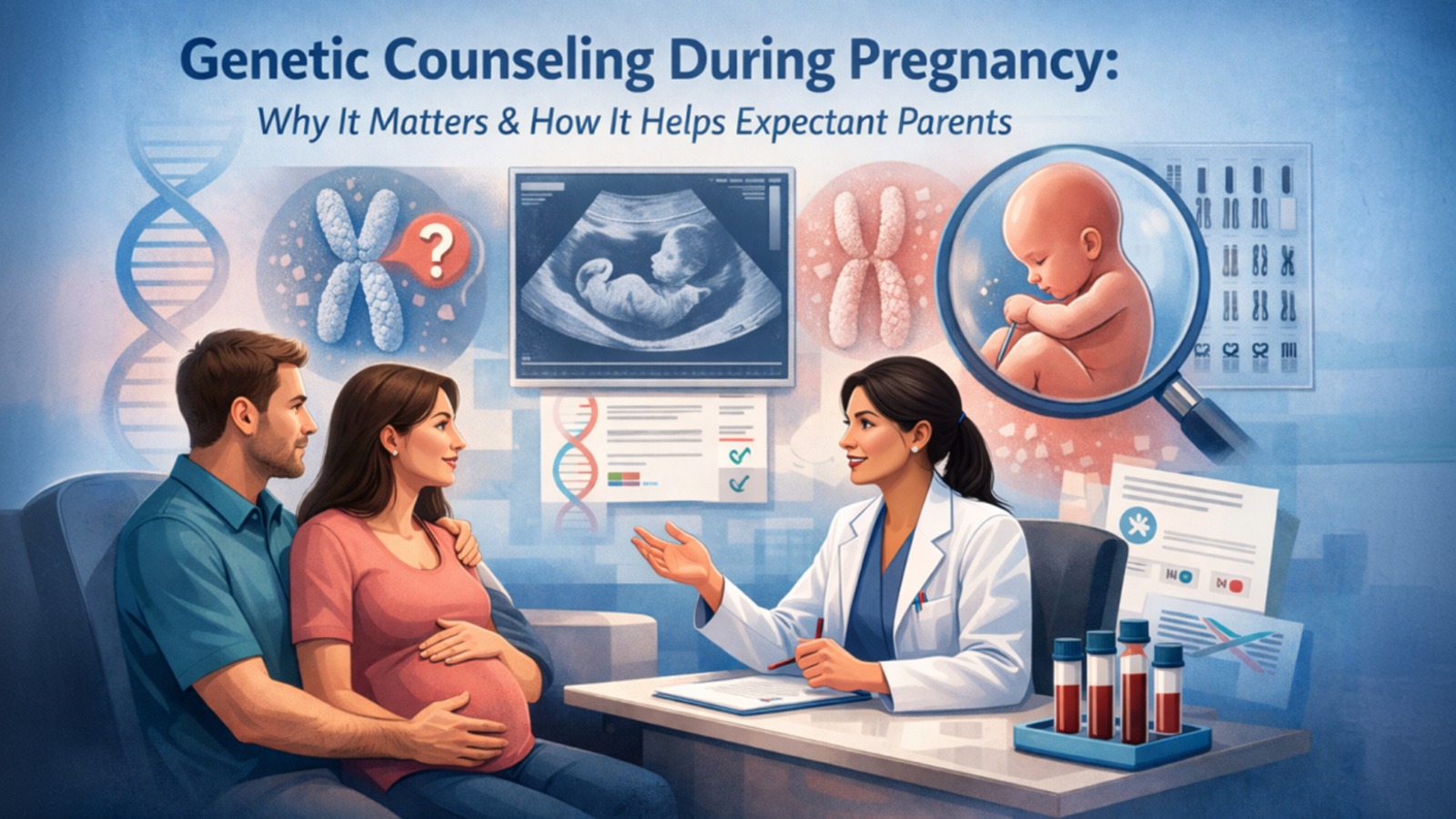
Modern pregnancy care offers advanced genetic testing that helps assess a baby’s health before birth. From prenatal screening tests to detailed diagnostic procedures, expectant parents now have access to more information than ever before.
However, testing alone is not enough.
Understanding genetic test results is what truly empowers parents.
This is where genetic counseling during pregnancy plays a vital role - transforming complex medical data into clear, meaningful guidance.
What Is Genetic Counseling During Pregnancy?
Genetic counseling during pregnancy is a medical consultation that helps expectant parents understand:
- Genetic risks to the baby
- Prenatal screening and diagnostic test results
- Inherited genetic conditions
- Chromosomal abnormalities
- Pregnancy-specific genetic concerns
The goal of prenatal genetic counseling is informed decision-making, not fear. It ensures parents clearly understand what results mean, what they don’t mean, and what steps — if any — are required next.
Why Genetic Counseling Is Important During Pregnancy
Genetic test reports often contain unfamiliar terms, percentages, and probabilities. Without expert interpretation, results can cause unnecessary anxiety.
Genetic counseling helps by:
- Explaining results in simple, non-technical language
- Clarifying the difference between screening and diagnostic tests
- Reducing fear after abnormal or high-risk screening results
- Providing accurate, individualized risk assessment
Without counseling, genetic testing may increase stress instead of reassurance.
Genetic Testing vs Genetic Counseling: What’s the Difference?
|
Genetic Testing |
Genetic Counseling |
|
Provides data |
Provides understanding |
|
Estimates risk |
Explains real-world meaning |
|
Uses numbers |
Adds medical and emotional context |
|
Can cause confusion |
Reduces anxiety |
Genetic testing is a tool. Genetic counseling is the compass.
When Is Genetic Counseling Most Helpful?
1. Before or Early Pregnancy: Risk Assessment & Planning
Early genetic counseling helps:
- Review family and medical history
- Understand maternal age-related genetic risks
- Choose appropriate prenatal screening tests
- Avoid unnecessary investigations
This ensures testing is purposeful, not routine.
2. After Prenatal Screening Tests: Understanding Risk
Prenatal screening tests estimate probability - they do not confirm a diagnosis.
Genetic counseling after screening helps parents:
- Understand what “high risk” or “low risk” actually means
- Avoid panic after abnormal screening results
- Decide whether diagnostic testing is needed
A high-risk screening result does not mean the baby has a genetic condition.
3. After Diagnostic Tests: Understanding Certainty & Options
Diagnostic tests such as amniocentesis or CVS provide more definitive results.
At this stage, genetic counseling focuses on:
- Explaining confirmed findings clearly
- Discussing prognosis and possible outcomes
- Understanding treatment options, if available
- Providing emotional and ethical support
Decisions are guided, not rushed.
How Genetic Counseling Reduces Pregnancy-Related Anxiety
In today’s digital world, parents often:
- Misinterpret online medical information
- Compare unrelated cases
- Assume worst-case outcomes
Prenatal genetic counseling provides:
- Accurate, evidence-based explanations
- Personalized risk interpretation
- Emotional reassurance alongside medical facts
Clear understanding replaces fear with confidence.
Is Genetic Counseling About Telling Parents What to Do?
No.
Genetic counseling is non-directive.
A genetic counselor or fetal medicine specialist:
- Presents unbiased medical information
- Explains benefits and limitations of each option
- Respects personal values and beliefs
- Supports parents regardless of their choices
The goal is empowerment, not pressure.
Role of a Fetal Medicine Specialist in Genetic Counseling
Genetic results must be interpreted alongside fetal development.
A fetal medicine specialist:
- Correlates genetic findings with ultrasound results
- Understands fetal growth and development stages
- Identifies when further evaluation is necessary
- Prevents over-testing and under-testing
Genetics does not exist in isolation — it must be evaluated within the context of pregnancy.
Why an Abnormal Genetic Result Does Not Always Mean a Poor Outcome
Not all genetic variations lead to serious conditions.
Some results may indicate:
- Mild or variable outcomes
- Conditions with available treatments
- Variants of uncertain significance
- Risks that may never affect the baby clinically
Genetic counseling prevents assumptions and focuses on evidence-based understanding.
Genetic Counseling as Ongoing Pregnancy Support
Genetic counseling often continues throughout pregnancy.
Follow-up sessions may involve:
- Reviewing new ultrasound findings
- Reassessing risks as pregnancy progresses
- Planning delivery or neonatal care if required
- Coordinating multidisciplinary support
Pregnancy care evolves - and counseling adapts with it.
Key Takeaway for Expectant Parents
Genetic counseling during pregnancy is not only for high-risk pregnancies.
It is for any parent seeking clarity, understanding, and reassurance.
If genetic testing is recommended, counseling ensures you understand:
- Why the test is advised
- What the results truly mean
- What steps — if any — come next
In pregnancy, knowledge is powerful - when clearly explained.
FAQ’s
What is genetic counseling during pregnancy?
Genetic counseling during pregnancy is a medical consultation that helps parents understand genetic risks, prenatal screening results, and diagnostic findings related to the baby’s health.
Why is genetic counseling important during pregnancy?
It helps interpret complex genetic test results, reduces unnecessary anxiety, and supports informed pregnancy decisions.
Who should consider genetic counseling?
All expectant parents can benefit, especially:
- Women over 35
- Couples with abnormal screening results
- Families with genetic disorders
- Pregnancies with ultrasound abnormalities
Does genetic counseling mean my baby has a genetic disorder?
No. Genetic counseling is often preventive and educational. It helps understand risks, not confirm diagnoses.
Can genetic counseling reduce stress during pregnancy?
Yes. Clear explanations and emotional support significantly reduce anxiety related to genetic testing